
Where the Forest Meets the Sea
Gathered By Tide - From The Field
The driftwood arrives after rain.
Not all at once. A log here. A branch there. The tangled roots of a tree washed up beyond the high tide mark.
Then one morning, the beach has changed.
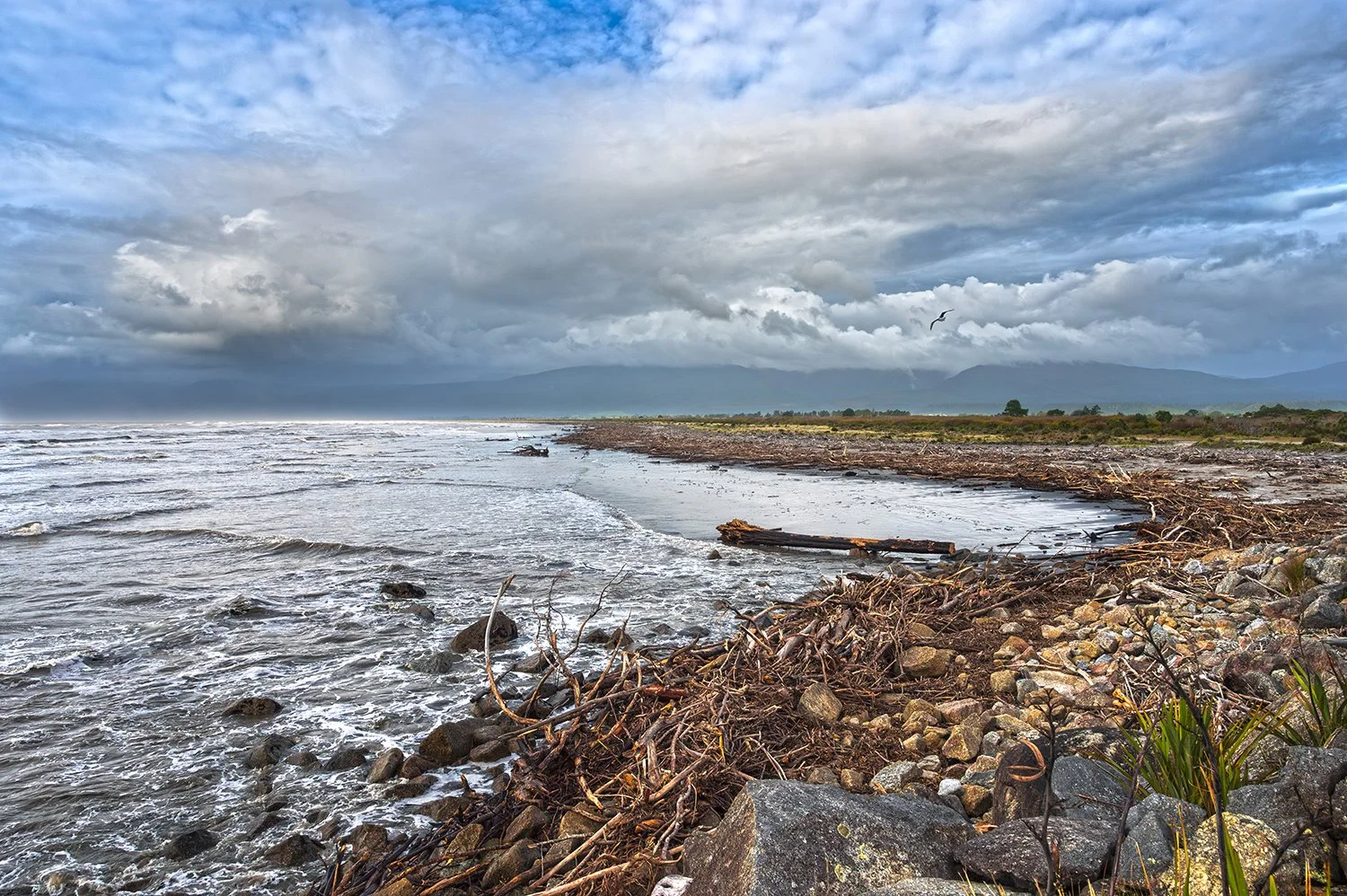
A fresh scatter of timber lies across the sand as though it has always been there. Silver-grey trunks rest on the sand. Twisted branches, entire trees, stripped of bark and polished by water.
On the West Coast, driftwood is so familiar it almost disappears into the landscape.
Until someone visits for the first time and asks the question.
Why is there so much of it?
The answer begins well beyond the beach.
Beyond the river mouth.
Beyond the ranges that rise behind the coast.
The beaches of Te Tai Poutini sit at the edge of one of the most rain-soaked landscapes in Aotearoa. Here, rivers begin high in the mountains and wind their way through valleys cloaked in rimu, kahikatea and beech forest before finding the Tasman Sea.
The Kawatiri carries water from deep within the hinterland to the coast at Westport. Further south, the Taramakau, Hokitika, Waiho and Haast rivers do the same. To the north, the Mokihinui emerges from rugged bush country before meeting the sea.
After heavy rain, these rivers change.
Water rises. Banks shift. Branches and fallen trees are caught in the current. Timber that may have rested for decades on a forest floor begins to move.
Sooner or later, much of it arrives here.
The sea takes over where the rivers leave off.
Waves roll the timber back and forth. Salt and sand smooth rough edges. Sunlight bleaches dark wood silver. Storms push logs ashore and tides rearrange them.
Walk the beaches at Westport, Karamea, Punakaiki, Hokitika, Ōkārito or Haast and you'll find driftwood gathered above the tide line like a meeting place between two worlds.
For generations, people have found uses for what arrives.
Children build forts.
Campfires are lit.
Artists gather pieces shaped by sea and time.
Photographers wait for the evening light to catch the pale timber against dark sand and rolling surf.
And still it comes.
One piece after another.
One flood after another.
One season after another.
Perhaps that's what makes driftwood feel different on the West Coast.
It isn't something separate from the landscape.
It is the landscape.
A reminder that the mountains, rivers and coastline are part of the same story.
That the rain falling in a forest valley today may leave its mark on a beach months from now.
That a tree growing high in the ranges may one day find its way to the sea and its resting place on the sand… until the tide rolls in and begins another journey.
